It is now clear that the water signature of cometary ice is different to that of the water on Earth. As such, the long-held belief among scientists that much of the Earth's water was deposited by impacting comets has been severely challenged. I wouldn't say that this theory is now entirely rejected among astronomers, because at the same time a large grey area has emerged between the nature and composition of comets versus asteroids. In astronomical parlance, the 'snow-line' has shifted. Nevertheless, it is clear that if water was deposited here early on, it did not come from the edges of the solar system. Rather, the water here is consistent with that found in the asteroid belt.
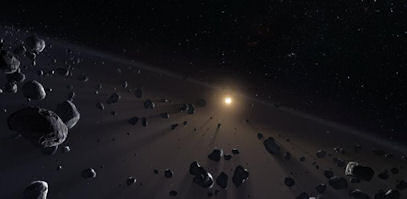
Because of this finding, scientists are now speculating that water was deposited upon a desiccated Earth by asteroids (1). While most asteroids sit quite happily in the main asteroid belt safely located between Mars and Jupiter, there are asteroids which have more eccentric orbits, and there are many 'near Earth objects'. The problem for scientists is that the speculation revolves around the water surprisingly featured on main belt asteroids such as 24 Themis and 65 Cybele. They don't come anywhere Earth, and never have. If one believes the currently accepted models of planetary formation in the solar system, then the Earth has always been where it currently is, and the main belt asteroids where they are. The two do not mix socially - so how did the water actually get to Earth if it was supposedly located on distant asteroids in the first place?
Zecharia Sitchin's vision of the early solar system offers a solution to this question - the asteroids and Earth come from the same source. According to his readings of ancient texts, he argued that Earth was once a much larger, watery world. Vitally important to the issue of the origin of Earth's water, the Earth was initially located where the asteroid belt is now. That argument holds great promise here, because if the early Earth was once located up to four times further away from the Sun, then its early water need not have been driven off by the Sun early on. This would also explain why there's water on the Moon.
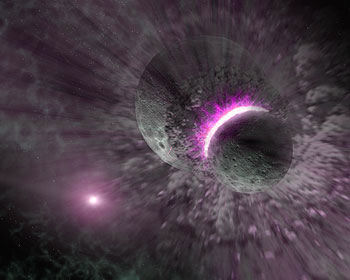
There's a lot of evidence for massive collisions upon the Earth early in its history. The leading scientific theory about the formation of the Moon holds that the Earth was struck by a planet the size of Mars. Furthermore, the Earth (along with other worlds) was pummelled by massive asteroids/comets/planetoids 3.9 billion years ago, during the late heavy bombardment. Surprisingly, water on the Moon is deeply embedded in rocks, suggesting water was part of the Moon's composition from the very beginning. If the Moon formed as a result of a collision of a planet with the early Earth, then it stands to reason that the early Earth also had water in abundance (2). In that case, the 'late veneer' theory is redundant anyhow. But the collisions themselves offer a suggestion as to how the Earth migrated:
Perhaps it's as simple as saying that the Earth got knocked off its perch, and the asteroid belt marks the spot of this catastrophic event. More likely, the close flyby of a larger, rogue body played a part - simultaneously providing the gravitational push for a substantial migration by the Earth, and the accompanying system of moons and comets that could have resulted in sizeable impacts during the flyby.
I think these latest findings lead us towards the conclusion that the Earth initially formed, water and all, much further away from the Sun than its current location. Furthermore, the asteroid belt is a by-product of whatever event drove the Earth deeper into the inner solar system. Such a situation would explain the Earth's abundance of water, the fact that the water did not come from comets, and the abundance of water located on even minor main belt asteroids far from the Earth.
Comet from the Kuiper Belt Has Earth-like Water
Comets in the solar system have variable origins. Over recent years scientists have looked at the water composition of comets in order to answer the question of where the Earth's water originated from. This is a trickier question than you might think. If the Earth formed in its current location (and note I say 'if') then the intense bombardment of the solar wind from the early hot Sun should have driven off all the volatiles from the Earth's primordial surface, including water. The fact that the Earth has abundant water, rather than being arid like Venus and to a lesser extent Mars, is a mystery.
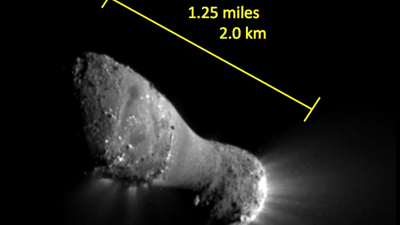
The generally accepted answer to this mystery is the 'later veneer theory', whereby water was deposited onto a dry Earth as a result of the impacts of many, many comets and asteroids over a vast period of time. But this theory has been questioned recently because the isotopic composition of water in the half dozen comets so far analysed has been different to that of Earth water. If they are a representative sample of smaller bodies in the solar system, then the water must have come from somewhere else: Firstly, there aren't enough comets in the solar system to have created the Earth's oceans, and secondly, the isotopic composition seems to be wrong anyway.
The latest comet to be analysed in this way has opened a door of hope on the Late Veneer Theory:
"New measurements from the Herschel Space Observatory show that comet Hartley 2, which comes from the distant Kuiper Belt, contains water with the same chemical signature as Earth's oceans. This remote region of the solar system, some 30 to 50 times as far away as the distance between Earth and the sun, is home to icy, rocky bodies including Pluto, other dwarf planets and innumerable comets." (3)
The problem is where comet Hartley 2 originally came from (4). The Kuiper Belt is effectively a second asteroid belt beyond the planet Neptune, much larger than its famous cousin which lies between the orbits of Mars and Jupiter. It is a part of the solar system astronomers are only just starting to understand, and regular readers of this site will recognise that it has thrown up a large number of anomalies and new questions.
Many of these new findings are suggestive, in my opinion, of a different scenario for the early solar system than is presently held by the mainstream scientific community. The new puzzle is why bodies originating close to the Earth have a different isotopic composition to the water found on our planet, whereas one originating in the distant Kuiper Belt has exactly the same. So where this new discovery throws the Late Veneer Theory a bit of a lifeline (5), it does not explain why the Earth has more in common with a Kuiper Belt Object that has strayed back into the inner solar system, than it does with the nearby asteroids and other neighbouring cosmic debris. Comet Hartley 2 seems misplaced, to say the least:
"However, the new results also raise new questions. Until now, scientists assumed that the distance of a body’s origin from the Sun correlated to the deuterium-to-hydrogen ratio in its water. The farther away this origin lies from the Sun, the larger this ratio should be. With a “birth place” within the Kuiper belt and thus well beyond the orbit of Neptune, Hartley 2, however, seems to violate this rule. “Either the comet originated in greater proximity to the Sun than we thought”, says Hartogh, “or the current assumptions on the distribution of deuterium have to be reconsidered.” And maybe Hartley 2 is a so-called Trojan that originated close to Jupiter and could never overcome its gravitational pull." (6)
Competing theories like mine, originating in Zecharia Sitchin's controversial explanation for the cosmic catastrophes of the early solar system, may offer answers to this mystery, which don't require rewriting the laws of physics. There's the potential here to prove a very important point about the origin of Earth. Let me explain: Earth may have formed in one of two locations, (1) where it is now (what everyone assumes), or (2) at the distance of the asteroid belt (Zecharia Sitchin's solution (7)). How can we tell? Scientists think that water in the solar system contains different ratios of hydrogen to deuterium isotopes, depending upon the formation distance from the Sun, and that gives us the potential ability to determine where things should sit in the solar system.
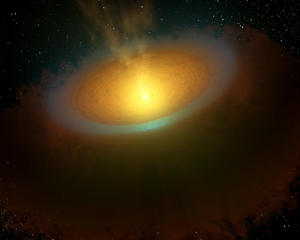
Now, if the Earth formed at the current distance, then the early waters were blasted off the surface of the Earth by the sun's solar wind, which was stronger initially than it is now. Like volatiles being blasted off comets as they approach the Sun, the Earth should have lost its water. It should have been dry when it solidified. As we know, it's actually wet.
So the water either came from impactors like comets and asteroids, or...the Earth formed further away from the Sun than it is now. At the distance of the asteroid belt, water would not have been blasted away.
When scientists look at the isotopic ratio of water contained in various bodies in the solar system, they are building up a picture of the early solar system. As it turns out, things have not gone as expected. Comets studied so far have not had the same ratio as Earth, so that brings into question whether the Earth gained water from them. This latest comet, which is really a Kuiper Belt Object, is the first to contain the same ratio as the Earth.
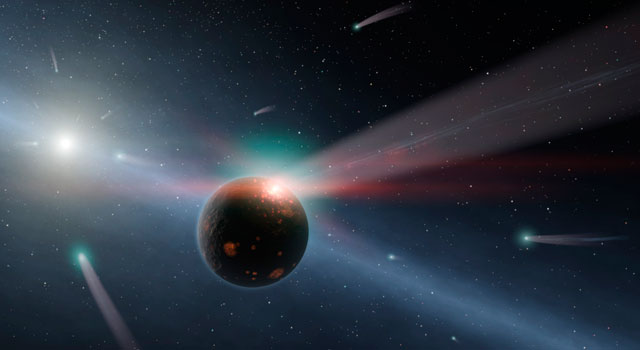
Some scientists suggest that the bombardment of the inner solar system that took place 3.9 billion years ago (the 'Late Heavy Bombardment') consisted of a swarm of giant comets from the Kuiper Belt displaced by the migration of Jupiter and Saturn. Such a concept is supported by the recent discovery of the debris of a giant comet in a neighbouring star system whose chemical signature matches meteorite fragments found here on Earth. A pattern may be occurring here:
"About
4 billion years ago, some 600 million years after our solar
system formed, scientists think the Kuiper Belt was disturbed by
a migration of the gas-giant planets Jupiter and Saturn. This
jarring shift in the solar system's gravitational balance
scattered the icy bodies in the Kuiper Belt, flinging the vast
majority into interstellar space and producing cold dust in the
belt. Some Kuiper Belt objects, however, were set on paths that
crossed the orbits of the inner planets.
"The resulting bombardment of comets lasted until 3.8 billion
years ago. After comets impacted the side of the moon that faces
Earth, magma seeped out of the lunar crust, eventually cooling
into dark "seas," or maria.
"Comets also struck Earth or incinerated in the atmosphere, and are thought to have deposited water and carbon on our planet. This period of impacts might have helped life form by delivering its crucial ingredients." (8)
Despite the ready supply of water in comet clouds seen forming around other stars (9), the problem remains that the population of the Kuiper Belt is insufficient to have supplied enough water to have filled the Earth's oceans. What could have swept through the Kuiper Belt to have displaced all those missing KBO asteroids? Surely not distant Jupiter and Saturn? This is where the Dark Star concept could really provide the answer (10). But caution is needed: the dataset here remains small, and we will only be able to piece the puzzle together properly when a larger sample of comets and asteroids has been properly studied.
Migrating Earth - Science Catches up with Sitchin
This website has argued for years that the evidence in the solar system increasingly points to a migrating Earth scenario. It seems, on the face of it, to be a rather far-fetched idea. As with so many things, we take the Earth's stability for granted, when in fact its history is pock-marked with catastrophe and monumental change. We assume that the Earth was formed at the same distance from the Sun and has stayed there ever since. But why should that be?
It is said that extraordinary claims require extraordinary evidence. The evidence for the early migration of the Earth (or possibly the Earth/Moon binary system) takes the form of the water in various parts of the solar system. This water, which consists of a mixture of isotopes, carries its own signature, which various according to where in the solar system the water first formed. Similarly, isotopic signatures can be derived from the elemental composition of rocks, helping scientists to slowly piece together the puzzle of the early solar system. Results are proving surprising.
The arguments involved become complex (and I have tried to do them justice in my book Dark Star (10), as well as on in-depth analysis on this webpage) but the picture that emerges from the evidence is that the water on Earth and the Moon is unexpectedly abundant, given how close they are to the Sun, and that the idea of water being brought to the Earth and Moon by comets is an insufficient explanation for what we see here.
I have therefore argued that the best explanation for what we see is that the Earth system initially formed where the asteroid belt is currently now, and migrated in to its current position following an early catastrophic event (involving the Dark Star). The more distant location for the early Earth provides us with a strong explanation for why the Earth has so much non-cometary water on it: it was too far from the Sun for the early solar heat to have driven the volatile water off. Such a scenario is in keeping with Zecharia Sitchin's theories of where the Earth formed.
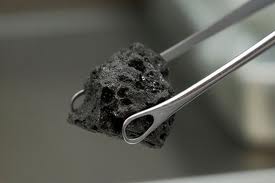
Further grist for this particular mill is now provided by recent studies of moon rocks which, when combined with the newest theories of Moon formation, lead the scientists in exactly the same direction. Here's the quote from New Scientist:
"So if the moon's water came from Earth, where did Earth's water come from? The impact that formed the moon happened within about 100 million years after solid bodies began to form in the solar system – an eye-blink in astronomical timescales. [Alberto] Saal [of Brown University, R.I.] doubts that Earth could have accumulated enough water from asteroid strikes in that time. "The implication, although I cannot absolutely prove it, is that probably the Earth formed with water," he says. The trouble is that our planet is currently too close to the sun for it to have retained water as it coalesced from the swirling disc of material that was to become the solar system.
Saal thinks that Earth may have formed near where the asteroid belt is now, which is far enough from the sun for water to condense. The planet would then have migrated inward. It'll be a tough theory to prove, because Earth's geologic activity has been recycling rocks, and thus erasing the evidence, for billions of years. That's what makes moon rocks so valuable.
"All that we know now is because we have a fossilised record of what happened 4.5 billion years ago on the moon," says Saal. "We couldn't get that conclusion from looking at the Earth." (11)
It appears that the interior waters of the Earth and Moon have the same source (12), leading to the conclusion that they were always there from the beginning of the life of Earth. I would imagine, then, that should the Inward Migration Hypothesis be correct, then we should find similar water compositions among the asteroids in the main belt. After all, if the Earth started its life there and was catastrophically expelled, then shouldn't at least some of those asteroids have been part of the early Earth? The composition of some meteorites suggests planetary origins, or at least that the were once fragments of very large planetessimals early in the life of the solar system:
"What is most unusual about these rocks [designated GRA 06128 and GRA 06129] is that they have compositions similar to Earth's andesite continental crust - what makes up the ground beneath our feet," says University of Maryland's James Day, lead author of the study. "No meteorites like this have ever been seen before." (13)
A smoking gun may be around the corner as space agencies and mining companies turn their attention towards asteroids. Scientists working with the data from WISE are currently piecing together the history of the asteroid families, projecting back in time to glue the pieces of the original 'vases' together (14). It seems evident to me that Sitchin's work is receiving further vindication from cutting-edge science, and that these endeavours will soon offer his idea some long-awaited proof.
Sceptics argue that there is no evidence that a planet larger than Mars ever existed in the zone currently occupied by the asteroid belt. Furthermore, the very presence of mighty Jupiter in this region makes the probability of the formation of a terrestrial planet not just low, but virtually impossible.
"“There’s a not a single piece of concrete evidence that would suggest that there ever was a full-sized planet in the asteroid belt,” said Nick Moskovitz, a planetary scientist at M.I.T. “In the region of the Main Belt, it’s dynamically impossible in the presence of Jupiter’s gravitational influence for small bodies to collide and stick together to form a full-sized planet.”
"In truth, the mass of the Main Belt — which extends just past the orbit of Mars to about three and a half times the distance from the Earth to the Sun — has not changed much over the 4.5 billion year life of the solar system. Moskovitz says the belt that we see today is the result of a population of bodies that have spent the subsequent 4.5 billion years interacting and colliding with one another." (15)
I'm generally sceptical when sceptics make such sweeping generalisations. The history of science is awash with examples of such bold statements proving laughably erroneous years later. One only needs to review the remarkable variety of extra-solar planets discovered in the last decade or so to see how theoretical positions held by astronomers beforehand subsequently required serious revision.
The Early Earth's Water
There's a new hypothesis doing the rounds to explain how the Earth got its oceans. This has been a big question for a long time among scientists, with a marked split between geophysicists and astronomers on the origin of our water. How to square the circle of a molten Earth losing its volatile materials during waves of catastrophic bombardment (including by 'Theia', the planet whose collision with proto-Earth led to the formation of the Moon) and the obvious anomalous evidence of our oceans. The Earth is relatively close to the Sun compared to most of the planets in the solar system, and was therefore subject to much more heat. This should have stripped off a lot of its volatile elements and compounds early on, including its nascent water.
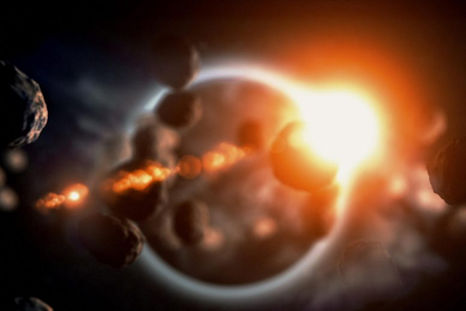
Geophysicists have often argued that the water was initially trapped underground, making its way to the surface later once things had cooled down a bit. Water is easily mixed within magma, for instance (16). Astronomers offer a different perspective, pointing to the collision of those very celestial bodies as sources of cosmic water from the heavens. Perhaps there's some truth in both theories. However, complicating matters is the difference between the isotopic fingerprint of the waters on Earth compared with those analysed on comets. Earth's waters most closely resemble water on asteroids in the outer asteroid belt, which is pretty weird when you think about it. Is it possible that the Earth and the asteroids share a common origin early on? The Dark Star blog has often argued that case (17).
The new Russian/Chinese hypothesis emerges from the geophysics camp. The argument being proffered is that water was trapped deep, deep down towards the centre of the Earth before the planet's iron core formed. So deep was this water that even a collision with another protoplanet was insufficient to shift it:
"In a recent study in Physical Review Letters, a Skoltech professor and his Chinese colleagues suggest a chemical compound that — although now extinct — could have preserved water deep underground in the violent era when massive collisions must have evaporated the Earth’s surface water. " (18)
The catch is that the water has to have been tied up in a material that could withstand extremely high temperatures and pressures. For this to work, the scientists involved have argued that the Earth once had a substantial amount of a hydrated chemical substance that is now extinct. Yep, you heard right. This stuff does not currently exist on Earth. But it might have once. There is just one "compound that fits the bill: magnesium hydrosilicate, with the formula Mg2SiO5H2, which is over 11% water by weight and is stable at pressures of more than 2 million atmospheres and at extremely high temperatures." (18)
This material can only remain stable under incredibly high pressures - way down in the planetary core. Because the Earth's core is now iron, it cannot exist in the planet's core now. But magnesium hydrosilicates might have before the iron sank down and coalesced into the current core, about 30 million years after the Earth first formed.
"In the first 30 million years of Earth’s history, before the Earth’s core was formed, these must have existed in the Earth, hosting much of Earth’s water." (19)
Of course, this is highly speculative. Proving such a contentious idea is quite impossible: Firstly, we can't directly determine what lies so deep within the Earth (or, indeed, within any other planet). Secondly, we can't determine whether this substance once existed naturally or not. There's no way of proving this beyond computer simulations. Despite these inherent (even pseudoscientific) issues, the hypothesis has been warmly received in the scientific literature, not least because if it was true it would solve a great many mysteries all in one fell swoop. For instance:
"The new hypothesis of water origin has implications for other celestial bodies, too. “Mars, for example, is too small to produce pressures necessary to stabilize magnesium hydrosilicate,” [Professor Artem] Oganov [of Skoltech] says. “This explains why it is so dry and means that whatever water exists on Mars, it likely came from comets.”" (18)
Essentially, the bigger the planet, the more water could have escaped escaping - if you see what I mean.
The Origin of Tiamat: The Water World
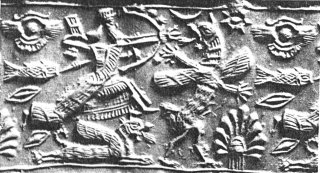
The obvious downside of this is explaining how so many asteroids in the inner solar system have such an abundance of water? (20) Why didn't they lose all their water early on? Unless they, too, originated from a substantial planet which had already cooled down before it was broken apart. In which case, the asteroid belt was once the scene of a massive celestial collision involving a massive watery planet. This is the idea offered by Zecharia Sitchin, based upon his controversial interpretation of ancient cosmology (7).
Many scientists think
that a planet could not have formed where the
asteroid belt is now, because of the relatively
close proximity to Jupiter. That's not to say that
the idea of a 'Planet V' in that zone has not been
seriously considered - even one that exploded (21)!
If exoplanet discovery tells us anything it's that
you should never say never. What is considered
impossible today is discovered tomorrow, and then
the theorists simply rebuild their simulations and
allow for what they previously discounted.
I've come across only one scientific paper that put
forward the idea that the Earth formed at the
asteroid belt and migrated inwards (I discuss this
further in 'Darker Stars' (10)). Perhaps Zecharia
Sitchin (7) has made this a no-go zone for
mainstream science, no matter how plausible it seems
to be.
I believe that the migration of Earth occurred during the period known as the 'Late, Heavy Bombardment' around 3.9 billion years ago. That mysterious bombardment occurred some time after the solar system had settled down into some semblance of order. I think that this series of cataclysmic events was initiated by the arrival of a substantial planet from interstellar space - the Dark Star. Some aspect of its entourage, perhaps a moon, ripped into the Earth at that time, propelling it inwards to its current position.
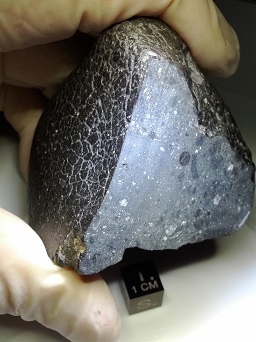
Image Credit: NASA (10)
It's now thought likely that the watery (and potentially habitable) phase on Mars took shape from this time forward. Recent geological evidence from the interior of a Martian meteorite has forced scientists to reconsider the red planet's own watery past (22).
“Prior studies of zircon in Martian meteorites proposed that conditions suitable for life may have existed by 4.2 billion years ago based on the absence of definitive shock damage” Dr [Aaron] Cavosie [from Curtin University’s Space Science and Technology Centre] said.
"“Mars remained subject to impact bombardment after this time, on the scale known to cause mass extinctions on Earth. The zircon we describe [found in Martian meteorite NWA 7034,colloquially known as ‘Black Beauty’ (23)] provides evidence of such impacts, and highlights the possibility that the habitability window may have occurred later than previously thought, perhaps coinciding with evidence for liquid water on Mars by 3.9 to 3.7 billion years ago.” (24)
This Martian connection adds fuel to the fire of this argument. Let's say Earth's watery precursor 'Tiamat' was struck by a moon-sized object about 3.9 billion years ago, spilling water out into space. Let's say that Tiamat was located near the asteroid belt. We not only explain Earth's watery past, but also the emergence of an asteroid belt full of water with the same isotopic signature as Earth's oceans. Further, some of that colossal spillage of water will have found its way to Mars triggering its own water phase after 3.9 billion years.
But we're still left with the question: Where did all that water come from in the first place? How is it possible there was so much water swilling around in the inner solar system? French scientists have recently proposed that a huge amount of water in the early inner solar system was originally sourced from interstellar space. They have been studying "the isotopic composition of hydrogen in calcium–aluminium-rich inclusions (CAIs) from primitive meteorites, the oldest Solar System rocks, to establish the hydrogen isotopic composition of water at the onset of Solar System formation" (25). The evidence led them to the conclusion that " the isotopic composition of inner Solar System water was established during the collapse of the protosolar cloud core owing to a massive admixture of interstellar water." (25)
This is incredibly welcome news for anyone interested in Zecharia Sitchin's cosmology. If true, it verifies that the water present on Earth is much the same as that present during the planet-building phase of the early solar system. The Earth's water was part of a massive reservoir of water available within the inner solar system, sourced from an interstellar gas cloud which merged with the Sun's protoplanetary disk.
"Their data show that two gas reservoirs existed
during the first 200,000 years of our solar system,
even before the formation of the earliest planetary
embryos. One of these reservoirs consisted of the
solar gas in which all the matter of our solar
system originated. With the meteorite, the
scientists were able to measure its record directly
for the first time ever. The second gas reservoir
was enriched in water vapour and already had the
isotopic signature of terrestrial water. It was
created by a massive influx of interstellar water in
the hot internal regions of the solar system, upon
the collapse of the interstellar envelope and the
formation of the protoplanetary disc. The early
existence of this gas with Earth-like isotopic
composition implies that Earth’s water was there
before the accretion of the first constituent blocks
of our planet." (26)
Therefore, there was PLENTY of water available to
create the watery monster Tiamat. The Earth didn't
receive its water from comets. Quite the contrary.
The massive bombardments it suffered later only
served to deplete its stock of water over time,
exacerbated by the action of the solar wind
stripping away much of its supply of volatile
materials. The early Earth was a much larger water
world, embedded within a wet inner solar system.